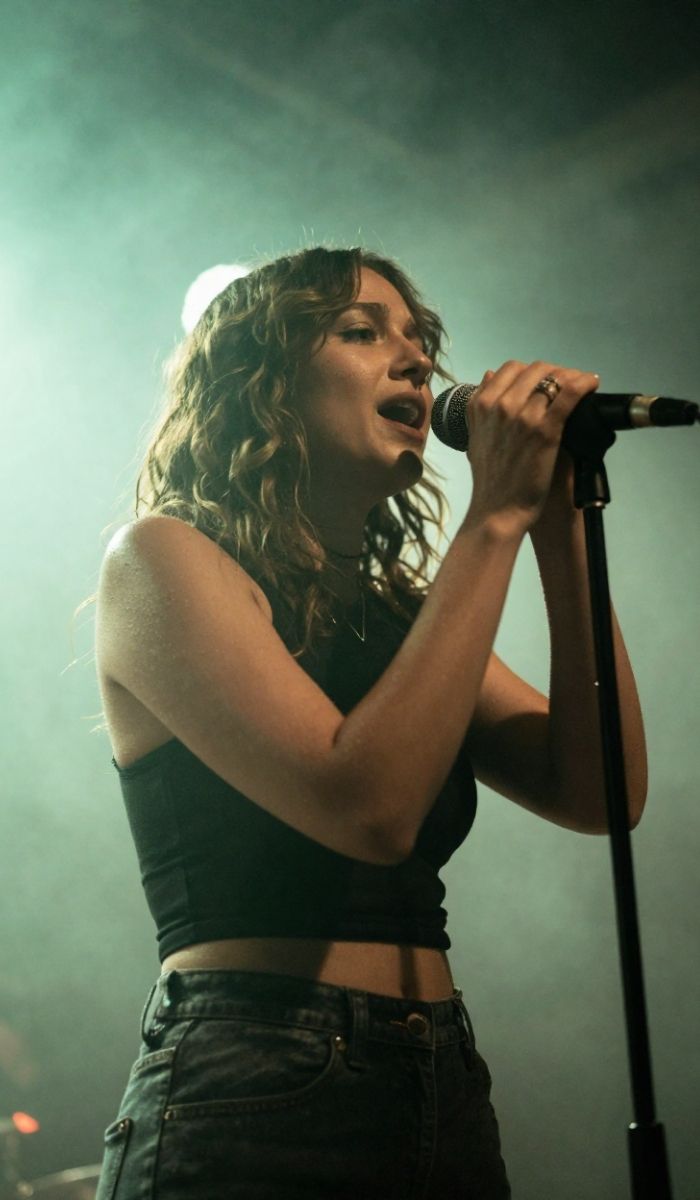
Styles we cover in Interpretation and Repertoire classes
Blues Voice
Blues singing focuses on raw emotion, storytelling, and vocal character. Students explore repertoire and techniques inspired by artists such as B.B. King, Etta James, Muddy Waters, Howlin’ Wolf, and Bessie Smith. Classic songs like Stormy Monday, Crossroads Blues, Mannish Boy, and I’d Rather Go Blind are used to study phrasing, tone, and emotional delivery.
Soul & R&B Singing
Soul and R&B demand a strong emotional connection, dynamic control, and rhythmic precision. Drawing inspiration from Aretha Franklin, Marvin Gaye, Stevie Wonder, Otis Redding, Sam Cooke, Al Green, and The Temptations, students work on songs such as Respect, What’s Going On, A Change Is Gonna Come, Try a Little Tenderness, and Superstition. Emphasis is placed on vocal power balanced with sensitivity and control.
Jazz Voice
Jazz singing requires rhythmic freedom, lyrical interpretation, and a deep understanding of harmony. Students study vocal approaches inspired by Ella Fitzgerald, Billie Holiday, Nina Simone, Chet Baker, and Louis Armstrong. Repertoire may include All of Me, At Last, Feeling Good, Autumn Leaves, and What Is This Thing Called Love. Interpretation, phrasing, and timing are key areas of focus.
Rock & Blues-Rock Singing
Rock and blues-rock vocals combine intensity, edge, and emotional honesty. Inspired by artists such as Janis Joplin, Eric Clapton, Beth Hart, Joe Bonamassa, Jimi Hendrix, and Bob Marley, students explore songs like Piece of My Heart, Born Under a Bad Sign, Voodoo Child, and I Shot the Sheriff. Safe vocal power, stylistic grit, and expressive phrasing are developed without strain.
Core Skills Developed in Vocal Interpretation:
Vocal intonation and nuance
Pitch accuracy is developed alongside expressive tools such as vibrato, tone color, and controlled imperfections that convey emotion rather than perfection.
Rhythm, phrasing, and timing
Students learn to manipulate timing, phrasing, and pacing, including the use of rubato and rhythmic displacement to create emotional flow.
Lyrics and storytelling
Great singers are great storytellers. We focus on understanding lyrics deeply and using vocal choices to communicate meaning, intention, and emotional truth.
Dynamic control
From intimate, soft passages to powerful, full-bodied belts, students learn how to control vocal dynamics safely and effectively.
Phrasing and stylistic freedom
Contemporary singing often allows freedom with pitch and rhythm. Students learn when and how to bend rules without losing musical coherence.
Microphone technique
Microphone use is treated as part of the instrument itself. Students learn how to use proximity, volume, and articulation for both live performance and studio recording.

 English